

IndiView Chart of the Week: The American Dream is REALLY Expensive
For generations, Americans have considered home ownership as part of the American Dream. For the current generation, this dream may not be attainable and, just maybe, not a valuable proposition even if they can afford to do so.
Today’s charts of the week focus on housing affordability. Before I start though, some acknowledgements:
- I am a homeowner.
- I’ve lived in my current property for 13 years.
- I still pay a mortgage on my home.
- I am one of the lucky ones who purchased when costs were down (early 2010s) and refinanced when mortgage rates were near all-time lows (early 2020s).
I provide this detail to show that my situation as a homeowner is very different than what new homeowners are facing. In my opinion, this is a critical step – assessing home ownership value based on the current situation.
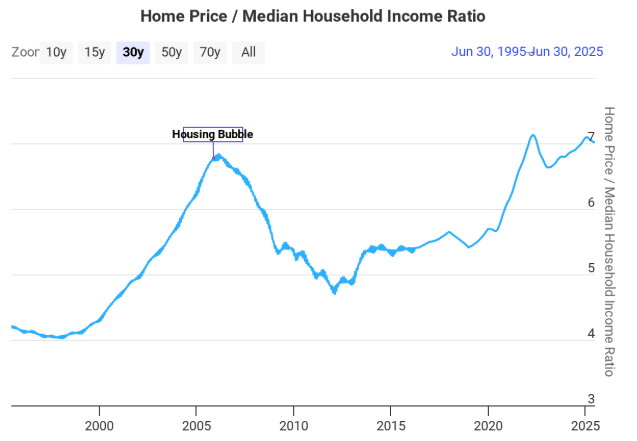
So, let’s start with affordability on just prices alone. The below chart references the home price to median household income ratio in the US. According to this data, housing prices relative to income are now exceeding the levels from the housing bubble of the early 2000’s.
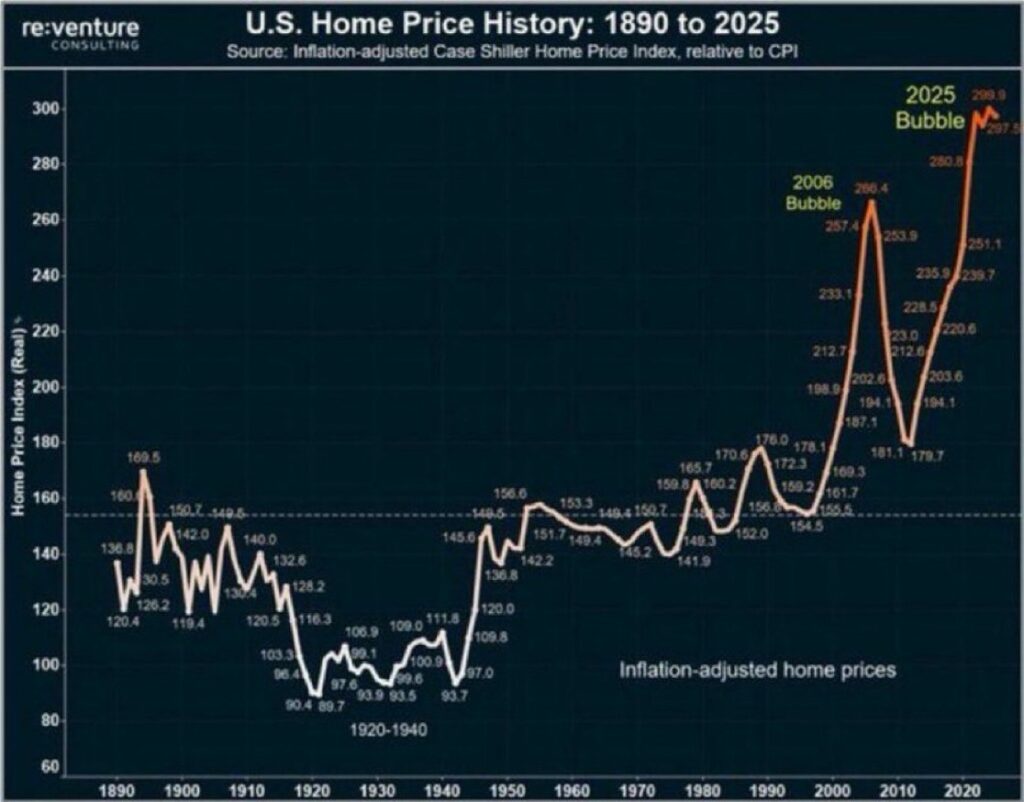
The next chart shows housing prices relative to CPI and goes back to the late 1800s. This also reflects that housing prices have NEVER been this expensive – and far exceeding the levels of 2006.
From a historical perspective, the data is alarming – but how did we get here?
Causes
Unlike the 2000’s – the culprit isn’t likely due to rampant speculation and bank willingness to lend without any credit verification at all (remember the “NINJA” loan – no income, no job). The more likely cause here has been the low amount of building activity after the housing crisis that has led to a permanent shortage of housing.
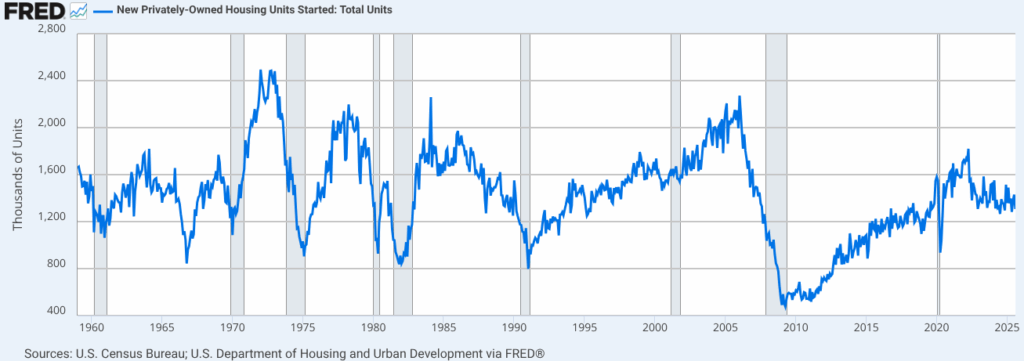
The chart below is the new privately owned housing units started – going back to 1959. The average over this time frame is 1,431 units. From the period of July 2007 to November 2019 – every single month was below the average. Since that time, we have been building at a close to average rate but we are nowhere near an overbuild status that would reduce costs (greater supply).
Adding to supply constraints is the average mortgage rate for a large swath of existing homeowners is well below the current market rate of 6.30% (per FRED as of 10/9/25). Per Redfin, as of Q2 2025, 80.3% of homeowners with mortgages had rates below 6%. This creates a lack of housing supply available because homeowners with low rates are reluctant to move and pay higher rates on their new mortgage.
What to do
Very simply – we would suggest running the numbers to understand the math around your decision. Numbers, however, won’t tell you everything. Homebuying has external factors that are more difficult to quantify and much more personal.
From my own experience, moving to a house in the suburbs to raise my kids, establish some roots, and customize my house completely to my family was something that superseded the cost calculation. While I never considered my house an “investment” (a topic for another time) – I do recognize that my time of purchase, combined with the historically low refinance rates, made my time VERY different than what current homeowners are experiencing.
On the other hand, renting has several benefits. Flexibility – transaction costs of rental is much less onerous than buying and selling homes. I find that flexibility is often an underrated financial asset. Second, maintenance. There is solace in things breaking where you call a number and they handle it for you. Things break in houses – and things need to be maintained even when they are working properly. Handling that on your own is certainly an option, but the costs associated when you own is often overlooked as part of the financial picture – not to mention the mental strain that upkeep can cause as well.
If you’d like to run the numbers – I found that Nerd Wallet has a pretty intuitive calculator that shows the time to breakeven between renting versus buying: https://www.nerdwallet.com/mortgages/calculators/rent-vs-buy-calculator
Closing
There is no question that owning a house has been associated with capturing a piece of that “American Dream”. I would argue that, based on current circumstances, the financial arguments for ownership are difficult to justify. So, run the numbers and weigh them against your current situation and reasons for owning a home (location, family, etc). If those supersede the financial argument, that is okay. However, understand that the American Dream is possible for renters too and, especially now, may allow you to live with greater flexibility and less financial strain. For many, that’s a better foundation for building a life.
Sources:
- https://www.longtermtrends.net/home-price-median-annual-income-ratio
- S&P CoreLogic Case-Shiller Home Price Index, U.S. Bureau of Labor Statistics CPI, chart by Reventure Consulting (via Bluesky post, October 2025).
- https://fred.stlouisfed.org/series/HOUST
This content, which contains security-related opinions and/or information, is provided for informational purposes only and should not be relied upon in any manner as professional advice, or an endorsement of any practices, products or services. There can be no guarantees or assurances that the views expressed here will be applicable for any particular facts or circumstances, and should not be relied upon in any manner. You should consult your own advisers as to legal, business, tax, and other related matters concerning any investment.
The commentary in this “post” (including any related blog, podcasts, videos, and social media) reflects the personal opinions, viewpoints, and analyses of IndiWealth employees providing such comments, and should not be regarded the views of IndiWealth LLC. or its respective affiliates or as a description of advisory services provided by IndiWealth or performance returns of any IndiWealth client.
References to any securities or digital assets, or performance data, are for illustrative purposes only and do not constitute an investment recommendation or offer to provide investment advisory services. Charts and graphs provided within are for informational purposes solely and should not be relied upon when making any investment decision. Past performance is not indicative of future results. The content speaks only as of the date indicated. Any projections, estimates, forecasts, targets, prospects, and/or opinions expressed in these materials are subject to change without notice and may differ or be contrary to opinions expressed by others.
Investments in securities involve the risk of loss.